

Motorized vs. Manual Curtain Track
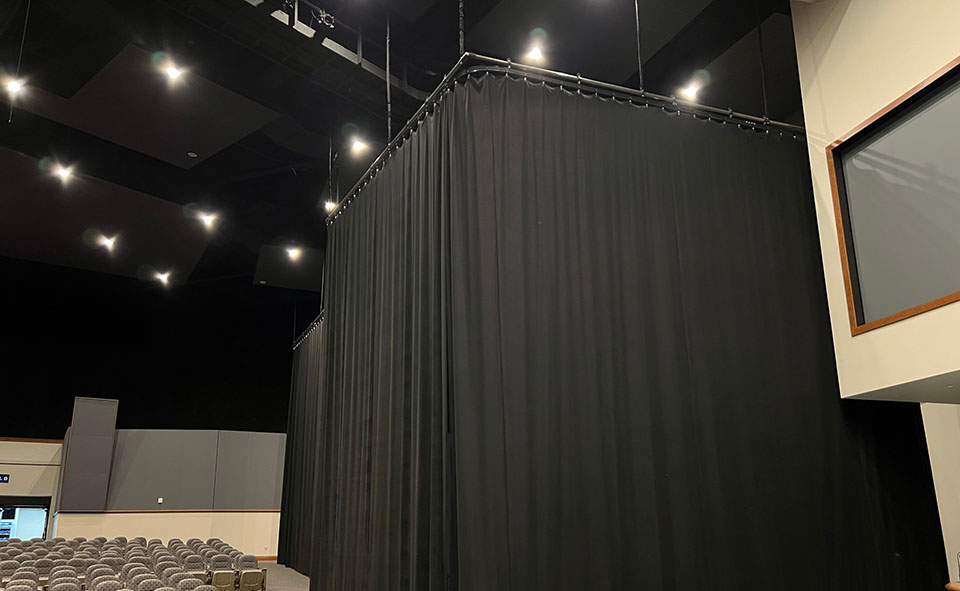
Curtain Track - Motorized vs. Manual
How Curtain Track Systems Work
Every traveler curtain — the main curtain that opens and closes across the stage — rides on a track mounted above the proscenium. The curtain moves along that track one of two ways: pulled by hand with a rope or wand (manual), or driven by an electric motor triggered with a switch, remote, or automated cue (motorized). The fabric, fullness, and hanging hardware can be nearly identical between the two — the difference is entirely in how the curtain moves.
Manual Track: Pros and Considerations
Manual track is the lower-cost, lower-complexity option. There's no motor to wire, maintain, or eventually replace, and it keeps working reliably through power outages. The trade-off is that it requires a person to operate it consistently and correctly. Additionally, the pull cords and hardware see more wear on curtains that open and close many times a week.
Motorized Track: Pros and Considerations
Motorized track gives you a consistent, repeatable cue every time — valuable for venues that open and close the curtain daily, like schools, houses of worship, and TV or livestream studios. It also removes the burden of physical operation, which matters for accessibility and for volunteer or student crews. The trade-offs are a higher upfront and installation cost, a dedicated electrical circuit, and periodic motor maintenance.
How Often You Use the Curtain Matters Most
If your curtain moves once or twice a month for occasional productions, manual track is almost always the more cost-effective, lower-maintenance choice. If it moves daily — a chapel service, a school's morning assembly, a broadcast set — the consistency and reduced wear of a motorized system tends to justify the added cost over time.
Safety & Reliability
A well-specified motorized system moves at a controlled, consistent speed, which can actually reduce fabric strain and snap-back compared to an inconsistent manual pull. That said, both systems depend entirely on qualified installation and regular inspection — the type of track doesn't replace the need for a properly rated structural mount and a periodic safety check (We recommend yearly inspections).
Installation & Maintenance Costs
Motorized systems require a licensed electrician to run power and a rigging team to mount the track and motor to code. Ongoing costs include periodic motor service and eventual component replacement. Manual systems avoid the electrical work entirely, with maintenance limited to occasional hardware, pull cord, or track wheel replacement as they wear.
Making the Decision
• Curtain moves daily or by non-technical staff? Go motorized.
• Budget-conscious, occasional use, or no easy access to power at the track? Stick with manual.
• Accessibility or ADA operation is a priority? Motorized is usually a better fit.
• Retrofitting an existing venue? Ask us whether your current track and structure can support a motor upgrade.
Frequently Asked Questions
Q: Can an existing manual track be converted to motorized later?
A: In many cases, yes — our ETCP-certified rigging team can evaluate your existing track and the structural support above it to determine whether a motor retrofit is feasible.
Q: Do motorized curtains need a licensed electrician for installation?
A: Yes. Motorized systems require a dedicated electrical circuit and should be wired by a qualified electrician working alongside our certified riggers.
Q: How loud are motorized curtain tracks during a performance?
A: Quality motorized systems run quietly, though noise level depends on the motor type and mounting. We can recommend low-noise options for performance spaces where sound matters.
To learn more about stage rigging types, design, and installation, click here.
To get a quote on rigging design, safety inspections, or curtain track installation, click here.
Subcategories